
Acne Scars: Types and Management Options
Acne Scars: Types and Management Options Acne is a common skin condition that may leave lasting changes in the skin...
Read More →
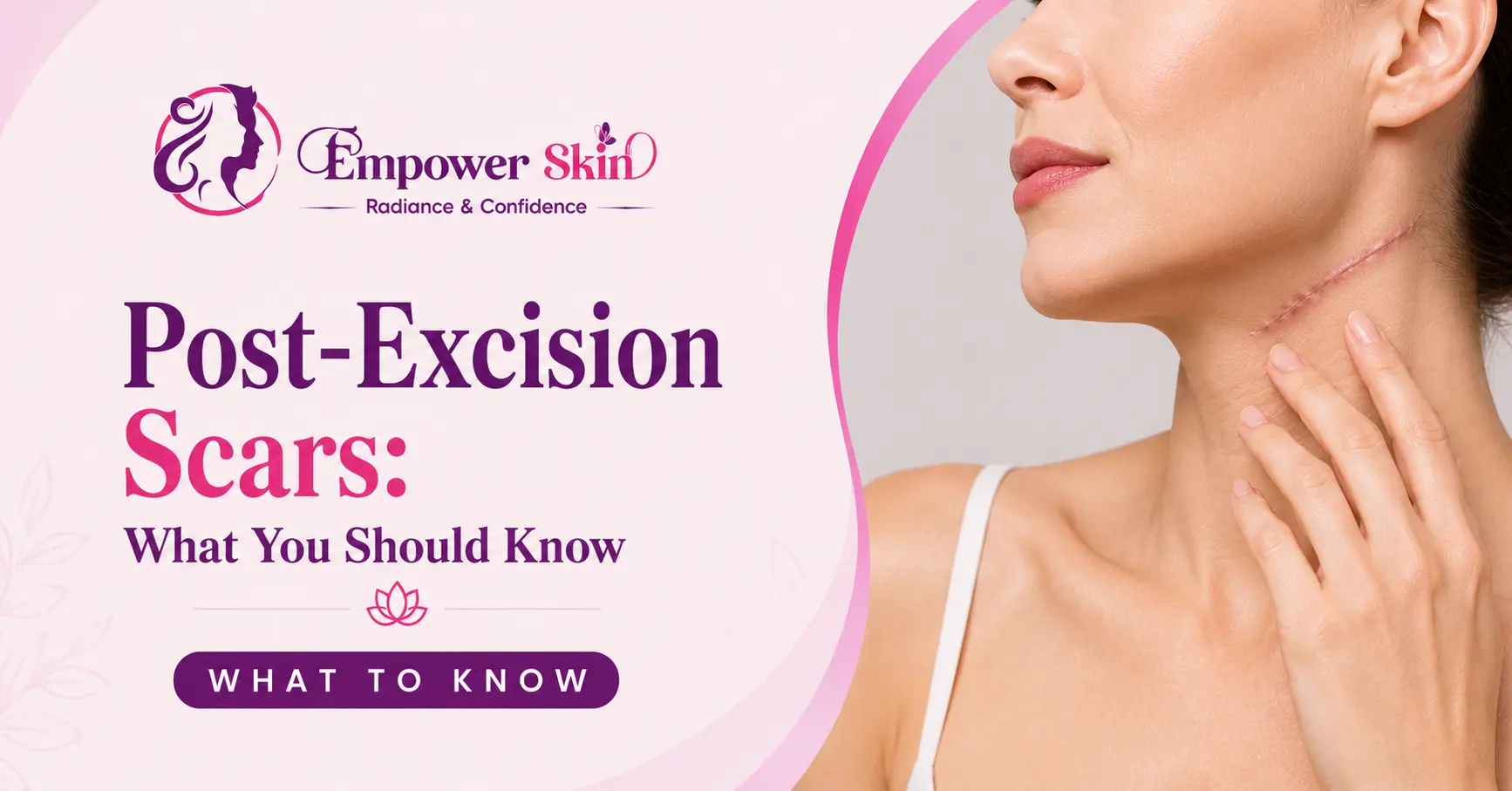
Skin excision procedures may be performed for a variety of medical reasons, including the removal of skin lesions, cysts or skin cancers. As the skin heals after an excision, a scar forms as part of the body’s natural repair process. The appearance of a post-excision scar can vary depending on several individual factors.
Understanding post-excision scars can help you recognise the normal stages of healing and know when a professional skin assessment may be beneficial.
A post-excision scar is the mark that forms after the skin heals following a surgical excision. Scar formation is a natural part of wound healing, where the body produces new collagen to repair the affected tissue.
The appearance of a scar may change over time as healing progresses.
Common characteristics include:
Every person’s healing process is unique.
Scars develop because the skin replaces injured tissue with new collagen fibres during healing.
Several factors may influence how a scar develops.
Larger or deeper excisions may result in more noticeable scars.
Areas exposed to greater movement or skin tension may heal differently from other parts of the body.
Each person’s body produces collagen differently, which may affect the final appearance of a scar.
Some individuals are naturally more likely to develop raised or more prominent scars.
Following professional wound care advice may support the normal healing process.
Scar healing occurs gradually and may continue for several months.
Immediately after the procedure, the body begins repairing the wound. Mild redness and swelling are common during this stage.
New collagen is produced to close the wound and strengthen the healing skin.
Over time, the scar gradually matures, becoming flatter, softer and lighter in colour for many individuals.
The length of each stage varies depending on individual healing.
Different types of scars may develop following skin excision.
These are the most common type and usually follow the line of the surgical incision.
These scars remain within the original wound boundary but become raised due to increased collagen production.
Keloid scars extend beyond the original wound and occur more commonly in individuals who are genetically predisposed.
These scars may develop where larger areas of skin have healed and can affect skin flexibility depending on their location.
A professional skin assessment may be appropriate if you:
An assessment helps determine whether your scar is healing as expected and what management options may be appropriate.
During your consultation, your clinician may evaluate several aspects of the scar.
The colour, texture and maturity of the scar are assessed.
Raised or thickened scars may require closer evaluation.
The flexibility of the surrounding skin may be examined.
Relevant medical history, previous scarring and healing patterns may be discussed.
This assessment helps guide recommendations based on your individual circumstances.
Looking after your skin during healing is an important part of scar management.
General recommendations may include:
Scars are generally permanent, although their appearance often changes as they mature.
Scar healing varies between individuals and may continue for several months after the wound has closed.
Some people naturally produce more collagen during healing, which may lead to hypertrophic or keloid scars.
If your scar changes significantly, becomes increasingly raised or you have concerns about healing, a professional skin assessment is recommended.
Understanding post-excision scars begins with recognising that scar formation is a natural part of the body’s healing process. Every scar heals differently, and a professional skin assessment can provide personalised advice based on your skin, healing progress and individual concerns.
This blog is provided for general educational purposes only and is not intended as medical advice. Individual suitability for any skin procedure or scar management approach should be determined through consultation with a qualified healthcare practitioner.
WhatsApp us