
Acne Scars: Types and Management Options
Acne Scars: Types and Management Options Acne is a common skin condition that may leave lasting changes in the skin...
Read More →
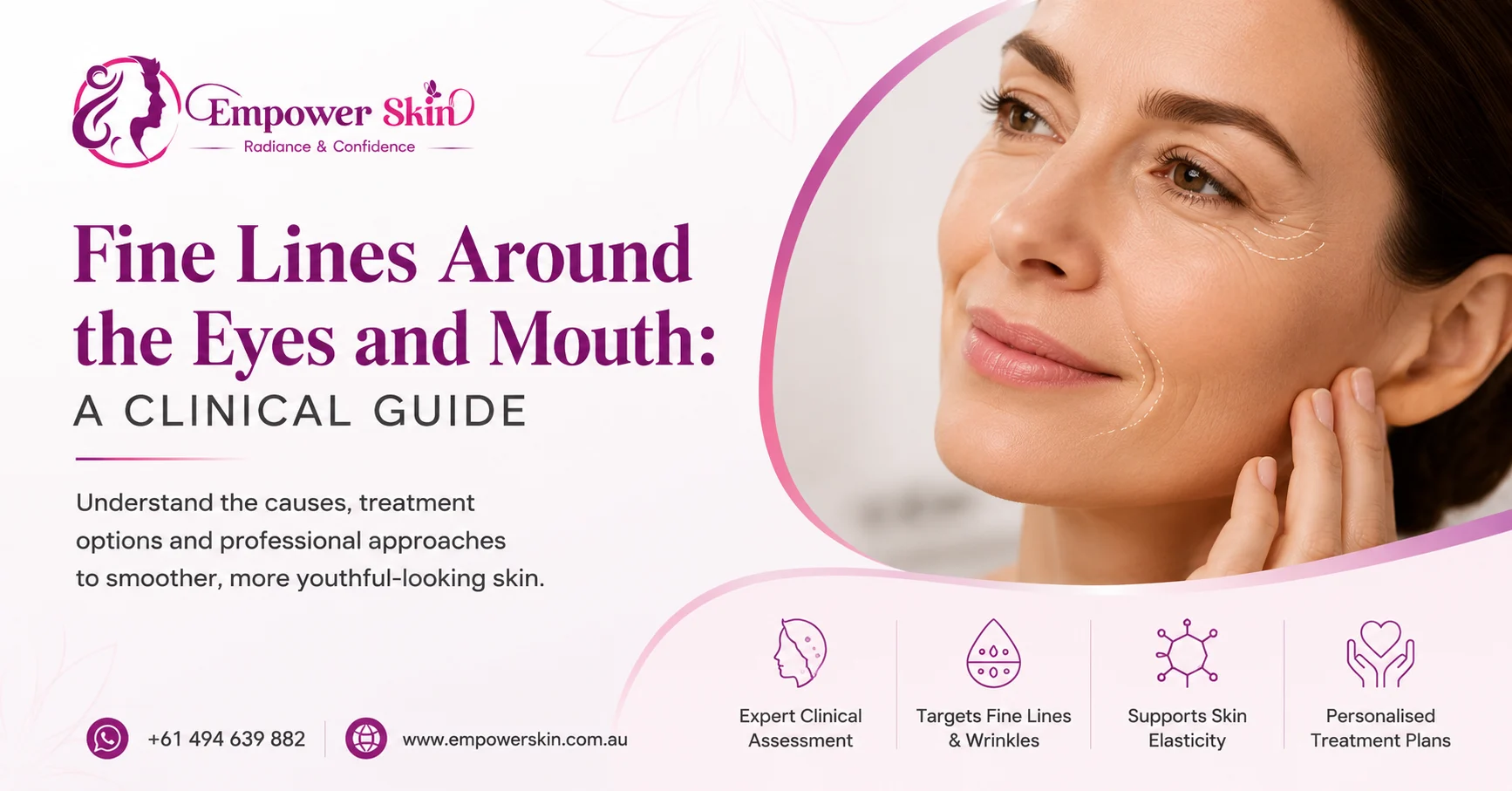
Fine lines around the eyes and mouth are among the earliest visible signs of skin ageing. These delicate areas are exposed to frequent facial movements throughout the day, making them more prone to developing small lines over time. While fine lines are a natural part of ageing, environmental and lifestyle factors may also influence when they appear and how noticeable they become.
Understanding fine lines around the eyes and mouth can help you recognise the factors that contribute to these skin changes and when it may be appropriate to seek professional advice.
Fine lines are small, shallow creases that develop on the surface of the skin. They often appear before deeper wrinkles and are commonly associated with natural ageing and repeated facial expressions.
The skin around the eyes and mouth is thinner than many other areas of the face, making it more susceptible to visible changes.
Often referred to as crow’s feet, these lines develop near the outer corners of the eyes and may become more noticeable during smiling or squinting.
Lines around the mouth, sometimes called perioral lines or smile lines, may develop due to repeated facial movements and changes in skin elasticity over time.
Several factors may contribute to the development of fine lines.
As we age, the production of collagen and elastin gradually decreases, reducing the skin’s firmness and elasticity.
Everyday facial movements such as smiling, laughing, talking and squinting place repeated stress on the skin over many years.
Long-term exposure to ultraviolet (UV) radiation may accelerate visible skin ageing and contribute to the development of fine lines.
Dry skin may make fine lines appear more noticeable, particularly around delicate facial areas.
Smoking, environmental pollutants, inadequate sleep and poor skincare habits may influence the appearance of premature skin ageing.
Fine lines may appear differently depending on your skin type and age.
Common signs include:
These changes usually develop gradually over time.
A professional skin assessment may be appropriate if you:
A consultation allows your clinician to assess your skin and provide recommendations based on your individual concerns.
During your consultation, your clinician may evaluate several aspects of your skin before discussing appropriate management options.
The overall texture, hydration and elasticity of your skin are assessed.
Natural facial expressions may be observed to understand how dynamic lines appear.
Your clinician may examine skin tone, pigmentation and signs of photoageing.
Relevant medical history, skincare routines and lifestyle factors may also be discussed.
This assessment helps guide recommendations tailored to your individual needs.
Healthy daily habits may help support your skin as it naturally changes over time.
General recommendations include:
Yes. Fine lines commonly develop as part of the natural ageing process, although the timing and severity vary between individuals.
The skin in these areas is thinner and experiences repeated facial movement throughout the day, making fine lines more likely to develop.
Long-term UV exposure may contribute to premature skin ageing, including the development of fine lines.
If you notice changes in your skin or would like personalised advice about maintaining healthy skin, a professional skin assessment may be beneficial.
Understanding fine lines around the eyes and mouth begins with recognising the natural changes that occur as the skin ages. While these lines are common, maintaining healthy skincare habits and seeking professional guidance when appropriate can help you make informed decisions about your skin health.
This blog is provided for general educational purposes only and is not intended as medical advice. Individual suitability for any skin procedure or management approach should be determined through consultation with a qualified healthcare practitioner.
WhatsApp us