Acne Scars: Types and Management Options
Acne Scars: Types and Management Options Acne is a common skin condition that may leave lasting changes in the skin...
Read More →
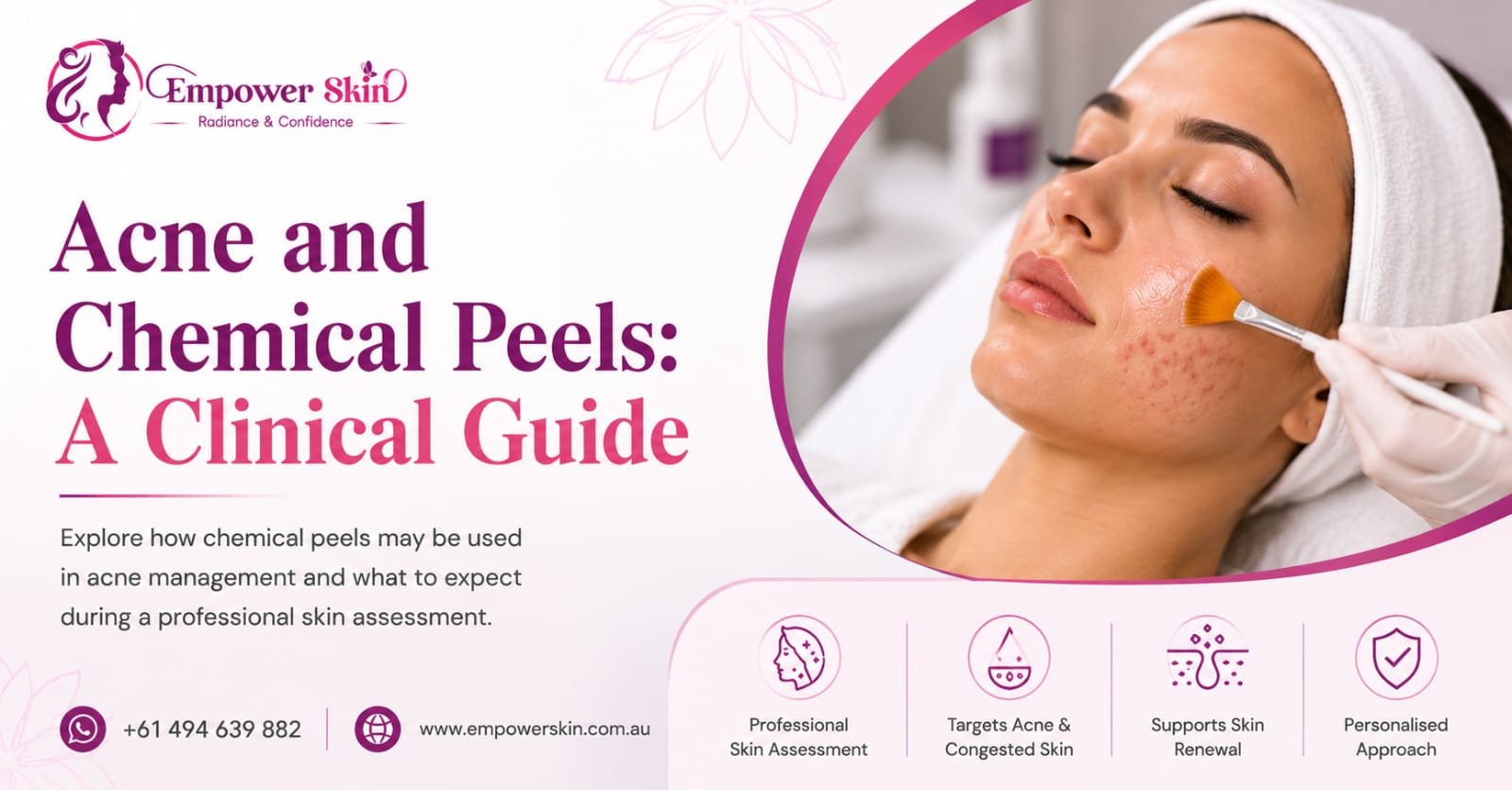
Acne is one of the most common skin conditions and can affect people of different ages and skin types. While many cases improve over time, some individuals experience ongoing breakouts, uneven skin texture or post-acne pigmentation.
When discussing Acne and Chemical Peels, it is important to understand that chemical peels are one of several professional skin management options to consider after an individual skin assessment.
Acne develops when hair follicles become blocked with excess oil, dead skin cells and bacteria. It can appear as:
The severity and appearance of acne vary from person to person.
Chemical peels are professional skin procedures that use carefully selected exfoliating solutions to encourage controlled skin renewal.
Various peel formulations are available, and the most appropriate option depends on your skin type and specific concerns.
For some individuals, Acne and Chemical Peels may be discussed as part of a personalised skin management plan.
A clinician may consider chemical peels to support concerns such as:
Suitability is determined through a professional skin assessment.
A professional skin assessment may be appropriate if you:
An individual assessment helps determine the most appropriate management approach.
During your consultation, a clinician may assess:
This information helps guide professional recommendations.
Daily skincare plays an important role in maintaining skin health.
General recommendations may include:
No. Suitability depends on your skin condition and professional assessment.
They may be considered for some individuals after a professional skin assessment.
The number of sessions varies according to individual skin needs and professional recommendations.
Recovery depends on the type of peel performed and the individual skin response.
Understanding Acne and Chemical Peels can help you make informed decisions about your skin health. An individual assessment is the best way to determine which professional skin management options may be appropriate for your skin concerns.
At Empower Skin Perth, every consultation begins with understanding your skin concerns and individual goals. Recommendations are based on professional assessment and tailored to your skin type and clinical findings.
Our approach includes:
If you have questions about acne-prone skin or would like a professional skin assessment, our team is here to help.
Empower Skin
Perth, Western Australia
🌐 Website: https://empowerskin.com.au
📱 WhatsApp: +61 494 639 882
This article is provided for general educational purposes only and is not intended as medical advice. Individual suitability for any skin procedure should be determined through consultation with a qualified healthcare practitioner.
WhatsApp us