
Acne Scars: Types and Management Options
Acne Scars: Types and Management Options Acne is a common skin condition that may leave lasting changes in the skin...
Read More →
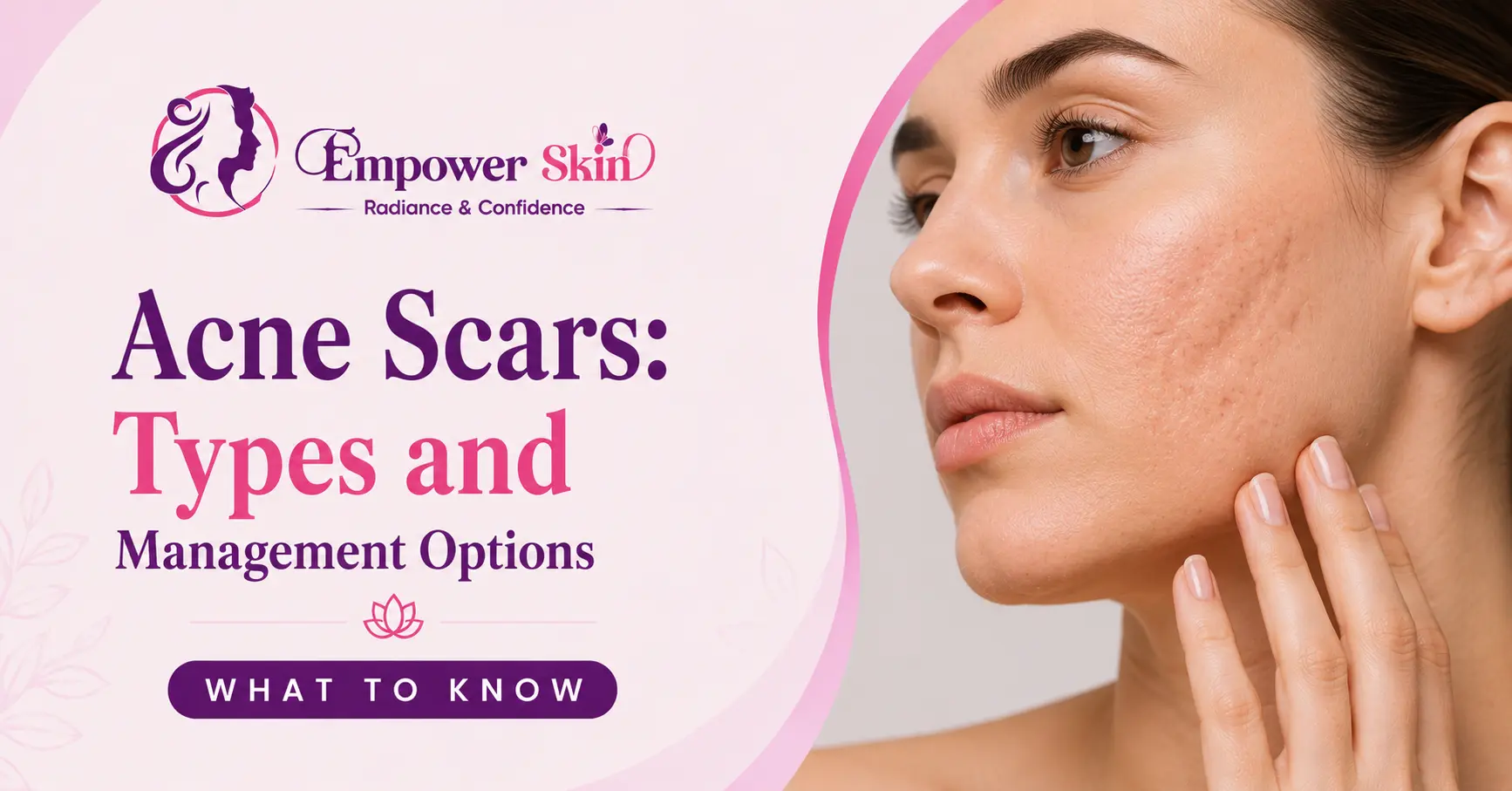
Acne is a common skin condition that may leave lasting changes in the skin after active breakouts have resolved. For some individuals, these changes develop into acne scars, which can vary in appearance, depth and severity.
Understanding acne scars, including why they develop and the different types, can help you make informed decisions about your skin health and determine when a professional skin assessment may be beneficial.
Acne scars are permanent changes in the skin that may occur when inflammation associated with acne affects the deeper layers of the skin. During the healing process, the skin produces collagen to repair the damaged tissue. If too little or too much collagen is produced, a scar may develop.
Not everyone who experiences acne will develop scarring, and the extent of scarring varies between individuals.
Several factors may contribute to acne scarring.
Moderate to severe inflammatory acne is more likely to affect the deeper layers of the skin, increasing the likelihood of scar formation.
Persistent or untreated inflammatory acne may increase the risk of permanent skin changes.
Manipulating acne lesions can increase inflammation and interfere with the skin’s natural healing process.
Each person’s skin heals differently. Genetics and individual collagen production may influence scar development.
There are several different types of acne scars, each with unique characteristics.
Ice pick scars are narrow, deep scars that extend into the skin, giving the appearance of small punctures.
Boxcar scars are broader depressions with well-defined edges. They are commonly found on the cheeks and temples.
Rolling scars create an uneven or wavy appearance due to fibrous bands beneath the skin.
Unlike depressed scars, hypertrophic and keloid scars develop when excess collagen forms during healing, resulting in raised areas of scar tissue.
Acne scars may present differently depending on the type and severity.
Common signs include:
Some individuals may also notice changes in skin confidence due to visible scarring.
A professional skin assessment may be appropriate if you:
An assessment helps identify the type of scarring and determine an appropriate management approach based on your individual skin.
A clinician may assess several factors before discussing suitable management options.
Your skin type influences how the skin heals and responds over time.
Identifying whether scars are ice pick, boxcar, rolling or raised helps guide professional recommendations.
The overall condition of your skin, including hydration, sensitivity and pigmentation, may also be assessed.
Relevant medical history and previous acne treatments may be discussed during your consultation.
Looking after your skin may help support its overall health.
General skincare recommendations include:
No. Many acne lesions heal without permanent scarring, although some individuals are more likely to develop scars than others.
In some cases, even mild acne may result in scarring, particularly if lesions are repeatedly picked or become inflamed.
Acne scars are generally considered permanent skin changes, although professional management options may be discussed following an individual assessment.
If acne scars are affecting your skin or you are unsure about the type of scarring you have, a professional skin assessment can help guide appropriate management.
Understanding acne scars begins with recognising the different types of scarring and the factors that contribute to their development. A professional skin assessment can provide personalised guidance based on your skin type, scar characteristics and individual concerns.
This blog is provided for general educational purposes only and is not intended as medical advice. Individual suitability for any skin procedure should be determined through consultation with a qualified healthcare practitioner.
WhatsApp us